What 400 Years of God’s Quiet Means for the Church Today
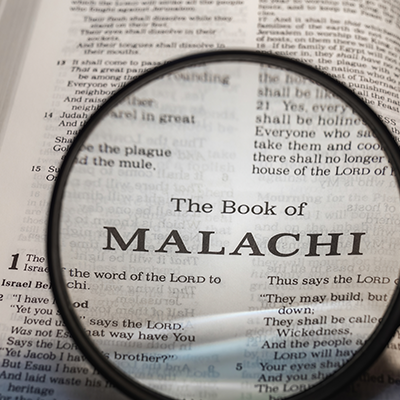
Open your Bible between Malachi and Matthew and you’ll find nothing but silence. No chapter. No verse. Just the turn of a page. Yet hidden in that quiet space lies roughly four hundred years of history — four centuries in which heaven, it seemed, said nothing.
You know, as I was preparing this post, in my research, a lot of commentaries and teachers noted that chapter 3:8-12 spoke of robbing God (in tithes and offerings), wandering away from God, ignoring His commandments, being bound for judgment, the whole nation being guilty. Then God admonishes in v.10 bring the entire tithe in the storehouse, so there may be food in the temple. And the promise of all nations calling us blessed, and that we will live in a delightful land. Speak about money and the church goes silent…isn’t that true today though? But that isn’t the focus on this post!
We often call it “the four hundred years of silence,” and it’s easy to skim past. But for the church living in what can feel like another long quiet season, that stretch of history may be one of the most relevant sections of Scripture we never read.
The Silence That Followed a Promise
Malachi, the last prophet of the Old Testament, closed his book around the fifth century BC with words that hang in the air like a held breath:
“Behold, I will send you Elijah the prophet before the great and awesome day of the LORD comes.” — Malachi 4:5
And then… nothing. No burning bush. No “Thus says the LORD.” No prophet standing in the temple courts. Generation after generation was born, lived, and died without a fresh word from God.
But notice something crucial: the silence did not erase the promise. Malachi ended with a prophecy, not a period. God’s last recorded words before the silence were words of hope — a messenger is coming; the sun of righteousness will rise with healing in its wings (Malachi 4:2). The people weren’t left with abandonment. They were left with anticipation.
“For I the LORD do not change.” — Malachi 3:6
That verse, spoken just before the silence began, became the lifeline of the waiting years. God’s voice went quiet, but His covenant character did not.
What Was Happening While Heaven Was Quiet
Silence, as it turns out, was not stagnation. During those four centuries, empires rose and fell — Persia gave way to Greece under Alexander the Great, then to the divisions of his generals, then to Rome. The Greek language spread across the known world, eventually giving us the Septuagint, the Greek translation of the Old Testament. Synagogues took root in towns far from Jerusalem. Roads were built that would one day carry apostles and letters.
None of this was random. Scripture gives us the lens to interpret it:
“The king’s heart is a stream of water in the hand of the LORD; he turns it wherever he will.” — Proverbs 21:1
God was not absent during the silence. He was arranging the stage. By the time Matthew opens his Gospel, the world has Greek for a universal language, Roman roads for travel, dispersed Jewish communities with synagogues in every city — everything in place for the gospel to travel at unprecedented speed.
“But when the fullness of time had come, God sent forth his Son.” — Galatians 4:4
Paul’s phrase says it plainly: the silence had a purpose, and the purpose had a deadline. God wasn’t delaying. He was preparing.
Silence Ended With a Word — And a Person
Then, suddenly: a voice in the wilderness.
“In those days John the Baptist came preaching in the wilderness of Judea, ‘Repent, for the kingdom of heaven is at hand.'” — Matthew 3:1–2
The break in the silence didn’t come as a casual announcement. It came through a prophet in the exact mold of Elijah — just as Malachi had promised — preparing the way for Someone greater. And within three decades, the Word itself arrived in the flesh:
“Long ago, at many times and in many ways, God spoke to our fathers by the prophets, but in these last days he has spoken to us by his Son.” — Hebrews 1:1–2
Here is the truth: after four hundred years of silence, God didn’t merely resume speaking. He sent the fullness of His message — His own Son, Jesus Christ. The silence made the arrival more glorious, the way darkness makes dawn unmistakable.
So, What Does This Mean for the Church Today?
Many believers today know what those four hundred years felt like. We pray and hear nothing. We serve and see little fruit. Entire seasons — sometimes entire generations — can pass without obvious revival or dramatic movement. Congregations shrink. Culture shifts away. Heaven can feel quiet.
The silence speaks directly into that feeling with at least four lessons.
1. God’s silence is not His absence
Four hundred years passed, and God never stopped ruling, providing, or preparing. The Persian kings, Greek armies, and Roman emperors who seemed to control history were, in God’s hands, instruments of preparation. When we cannot trace His hand, we can still trust His heart:
“The LORD of hosts has sworn: ‘As I have planned, so shall it be, and as I have purposed, so shall it stand.'” — Isaiah 14:24
“Be still and know that I am God.” — Psalm 46:10
2. The waiting is a test of faith — and a school for it
Habakkuk was told to wait for a promise that would surely come, even if it seemed slow:
“For still the vision awaits its appointed time… If it seems slow, wait for it; it will surely come; it will not delay.” — Habakkuk 2:3
“Let us not grow weary of doing good, for in due season we will reap, if we do not give up.” — Galatians 6:9
Those who held to Malachi’s words through the silent centuries were positioned to recognize John the Baptist when he appeared. Waiting faithfully is not wasted time; it is formation.
3. Keep doing the last thing God told you
The faithful in the silent years didn’t invent new strategies to force God’s hand. They kept the covenant practices He had given — worship, Scripture, prayer, raising children in the faith. Jesus later blessed exactly this posture:
“Blessed are those servants whom the master finds awake when he comes.” — Luke 12:37
Faithfulness in the quiet is the seedbed of readiness for the sudden.
4. The ultimate silence-breaker is still ahead
The first advent broke four hundred years of silence; the second advent will end every form of waiting forever:
“For the Lord himself will descend from heaven with a cry of command…” — 1 Thessalonians 4:16
“Surely I am coming soon.” Amen. Come, Lord Jesus! — Revelation 22:20
The church today lives in a gap very much like the one between the testaments: promises given, fulfillment pending, silence pressing in. And the promise we hold is even clearer than Malachi’s.
A Call to Action
So what should we do in the silence? Not despair. Not drift. Here are four commitments to take from this post into this week:
- Return to the Word you already have. The believers in the silent years treasured the Scriptures they’d been given. Open your Bible daily this week — for nourishment. (Psalm 119:105)
- Pray through the quiet. Set aside time each day to pray even when nothing seems to change. Silence is an invitation to deeper dependence, not a reason to stop speaking. (1 Thessalonians 5:17)
- Stay faithful in the small things. Serve your church, love your neighbor, raise your children in the faith — the ordinary, unglamorous work that keeps the lamp lit while the bridegroom tarries. (Luke 12:35–36)
- Tell someone about the Word made flesh. The greatest message ever broken into human history was delivered after the silence. Someone in your life is sitting in their own quiet season and needs to hear that God has spoken. Share it this week. (Mark 16:15)
The page between Malachi and Matthew looks empty, but it is one of the loudest testimonies in all of Scripture: God’s promises do not expire in the silence. The One who waited four hundred years to send His Son has promised to return — and He has never once missed an appointed time.
Hold fast. Keep watch. Remain faithful. The voice that broke the silence once will break it again.
“He who testifies to these things says, ‘Surely I am coming soon.’ Amen. Come, Lord Jesus!” — Revelation 22:20
If this encouraged you, share it with someone walking through their own season of silence — and subscribe to JubberJournal for more studies like this one that connect Scripture to everyday faith.

I created this space as a welcoming home for candid life discussions, faith, and purposeful community. My journey has been anything but conventional—from navigating childhood moves to Europe, spending 40 years in the printing industry, and living across two vastly different worlds in Zimbabwe and the United States, God has spent decades quietly forming my heart before officially calling me into pastoral ministry. Recently ordained and commissioned as a pastor, I write from a place of real, lived experience, openly sharing the highs of deep faith alongside the raw seasons of depression, doubt, and navigating life’s unexpected detours. Since establishing this journal back in 2005, my mission remains simple: to listen without judgment, share honest testimonies, and encourage you to slow down, press pause, and discover how to shine brightly for Jesus in our everyday lives.